Two categories, two customer problems
An importer or dealer adding an off-grid camping category usually stands between two shelves: pickup campers and travel trailers. The comparison is usually run on features. For a buyer assembling an import list, it runs better on the customer — what vehicle the market already owns, what that vehicle does during the week, and what the business already sells. The two categories answer those questions differently, and the structural facts documented on this site are enough to decide which one fits.
One rule before the comparison starts: this article argues the camper side from documented facts only and keeps the trailer side definitional. Nothing is claimed about registration, insurance, tow ratings or market share for either category — those are market-side checks that belong to your own due diligence and to the compliance confirmation made per destination before an order.
What a truck camper does that a trailer does not
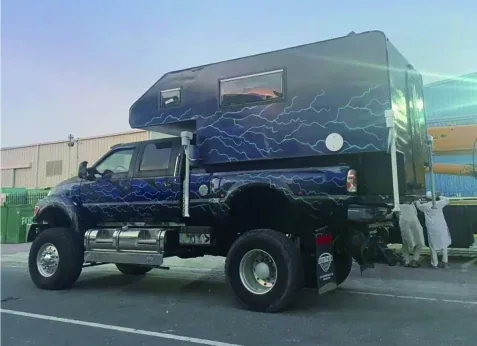
A truck camper is not a second vehicle. It mounts in the bed — or, on the flat-deck and residence models, onto the deck or the chassis — of the pickup the customer already owns and drives every day. Three documented facts carry the whole category argument:
- One body per vehicle: every body is custom-made to the bed or chassis dimensions of the customer's specific pickup. Send the make, model, generation and dimensions, and the body length, mounting type and weight are confirmed before the order.
- Non-destructive fitment: the unit bolts into the bed or onto the chassis without cutting or welding the vehicle, and can be removed again when the truck is changed — the camper is an addition to the truck, not a modification of it.
- Low travel profile: on the pop-top range the roof travels down, so the truck keeps a low travel height on the road and gains full standing headroom at camp.
For the customer, the consequence is that the camper rides on a vehicle they already use — there is no second unit to store, register or tow behind the daily driver. For the dealer or importer, the consequence is that the product attaches to the pickup-owning customer the business already serves, rather than asking the customer to enter a second vehicle category first.
The comparison, kept structural
| Decision axis | Truck camper (as documented on this site) | Travel trailer (definitional) |
|---|---|---|
| What the customer brings | The pickup they already own — the body is made to its bed or chassis dimensions | A second, towed unit bought alongside the vehicle |
| Attachment to the vehicle | Bolt-on, non-destructive mounting; reversible when the truck changes | Towed behind the vehicle as its own unit |
| Travel and daily use | Travels as part of the truck; pop-top roofs travel low and open to standing headroom at camp | Travels behind the vehicle; the tow vehicle remains separate |
| Between trips | The body can be removed from the truck and the truck stays the daily vehicle | The trailer is a second unit to park between trips |
| Category entry for the importer | Mixed-model containers accepted with flexible MOQ; quotation issued against the confirmed specification, volume and destination | Outside the documented range — confirm on the supplier side |
The trailer column is deliberately thin. A travel trailer line can absolutely be the right answer for some markets — the point of this article is not to settle that question in the abstract, but to show that the camper category can be evaluated on documented, checkable facts before any money moves, and that the decision can be tied to the vehicle profile of your own customer base.
The supplier logic behind the camper category
For an importer, the category question is also a range question. The camper catalogue spans four product families: pop-top campers for the low-travel-height retail core, hard-top bodies for cold and wet climates where canvas would be a maintenance item, canopies for work-truck and dual-use markets, and roof-top tents that are not tied to a pickup at all. For RV and 4x4 dealer buyers, this is described as retail-ready units across pop-top, hard-top, canopy and roof-tent price points, without a second supplier.
That breadth changes how the category can be entered. A first container can mix models — mixed-model container loads are accepted with flexible MOQ, and roof-top tents containerise as flat packs — so the category can be tested at the width the market needs rather than committed in depth. Price and lead time are quoted against the confirmed specification, the order volume and the destination port, so the category decision and the commercial terms are settled in their proper order: specification first, quotation against it second.
When the camper category belongs on your list
- Your customer base already runs pickups — the camper mounts to the vehicle they own, with the body made to its bed or chassis dimensions
- Daily usability and storage matter in your market — the body is removable and the truck remains the daily vehicle
- You want to cover entry to premium positions without a second supplier — pop-top, hard-top, canopy and roof tents span the price points from one catalogue
- You want to test the category before committing depth — mixed-model containers and flexible MOQ let the first order match the demand you can prove
- Where a trailer line already exists, roof-top tents still fit the list — they mount to any vehicle with a roof rack or crossbars, trailer customers included
- Send the market, the vehicle list and the intended position at process stage 01, so fitment and compliance are confirmed for the destination before the specification is locked
If the profile above matches your market, the category decision is already made: the camper range mounts to the trucks your customers own, covers the price points from one catalogue and can be entered at the scale the demand supports. Send the market and the vehicle list through the contact page — the answer comes back as a written specification and a quotation issued against the confirmed volume and destination, with price and lead time stated against that order rather than published.