Why a mixed load is a planning decision, not a compromise
A first container usually has to do two jobs at once: prove the category sells, and cover more than one customer type while it does it. On a single-model order you have to guess which price point is right before you have any sell-through data. On a mixed order you can put two or three positions into the market at the same time — a body-led line and an accessory-led line, for example — and read the results from one shipment.
The constraint is not whether the factory allows it. MOQ is flexible and depends on the series and on how the units ship, and mixed-model container loads are accepted. The part that needs care is planning the mix and the shipping format together, because the format is decided by the model rather than by preference.
What ships in which format
This is the single most useful table to have in front of you while building a first order, because it decides how much of the load is taken up by which product, and therefore what the mix can be.
| Product | Range | Shipping format | Planning consequence |
|---|---|---|---|
| Pop-top camper bodies | T1 to T6 | Assembled or in shipping configuration, according to the model | The model you pick decides how it travels — confirm it with the model, not after |
| Hard-top camper bodies | H1, H2 | Assembled or in shipping configuration, according to the model | Fixed-roof bodies still have no lifting mechanism to prepare for transit |
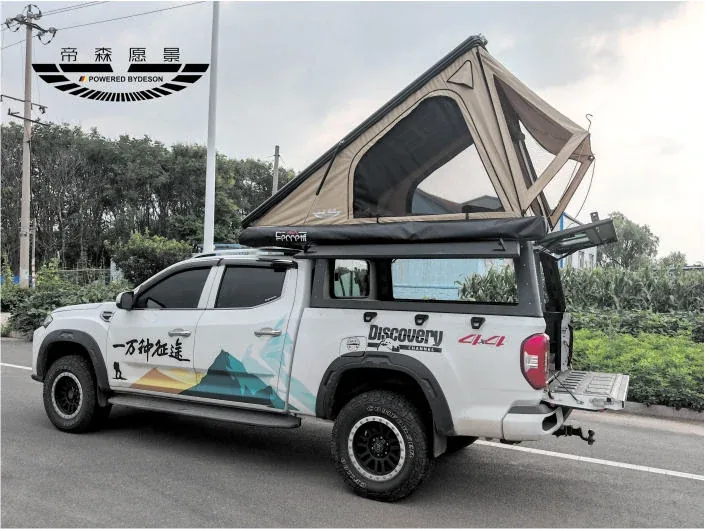
| Canopy campers | C1, C2 | Canopy body with a folding roof tent on top | Two products in one unit, so it counts once against the load plan |
| Roof-top tents | R1, R2 | Compact flat packs | The cheapest item in the range to move, and the easiest to add to an order going somewhere else |
The pattern to notice is that camper bodies and roof-top tents behave differently in a container, and that the difference is an advantage rather than an obstacle. The bodies are the main content of the order; the tents are flat and stackable, which makes them the natural fill for the space a body-led load leaves behind.
The mix decision: how many positions does the load need to prove
Most importers building a first order are trying to answer one question in-market: which position does my customer base actually buy? The four ranges answer four different positions, and they do not overlap as much as they look like they do.
- A hard-top body answers a market where the customer wants no setup and the climate makes canvas a conversation the dealer would rather not have.
- A pop-top body answers a market where the customer keeps the truck as a daily driver and travels at weekends, and where the low travel height matters.
- The T6 hard-fold sits between those two: a hard-shell lifting roof on an aluminium body, for four-season retail and premium rental.
- A canopy camper answers a dual-use market, where the same vehicle earns its keep as a work truck during the week and sleeps two at the weekend.
- A roof-top tent answers everyone else — it mounts to any vehicle with a roof rack, so a single line serves every customer who walks in.
Read that list against your own customer base before you read it against a price list. If your market is 4x4 accessory retail, the tent range is the entry point and the bodies are the follow-on conversation. If your market is RV retail with a fleet channel alongside it, the reverse is true. A mixed first container is most useful when the two positions in it are ones you can name a buyer for.
Deciding the model mix and the format in one pass
The mistake that costs an importer the most on a first order is choosing the models first and then discovering that the shipping format they wanted for one of them is not the format that model ships in. Because the format follows the model, the two have to be settled in the same conversation — with us, and with the specification.
- Name the positions you want to test, in words rather than models. Zero-setup retail, weekend pop-top retail and accessory retail is a usable brief. This is the part that belongs to your market knowledge, not ours.
- Map those positions to ranges, and shortlist models within each range. The series pages carry the constructions and mounting types; the selection guides on each series page narrow the shortlist.
- Ask for the shipping format of every shortlisted model at the same time. This is the step that stops a pleasant surprise from becoming a re-plan.
- Decide whether roof-top tents are part of the same order or a later one. If they are part of it, they add a low-cost line that serves a different customer.
- Write the equipment level for each body before the quotation, because the interior is configured per order and the specification and the quotation have to describe the same unit.
- Confirm the destination port and the market you are selling into. Compliance requirements differ by product and by market, so the documents question belongs in the first conversation rather than the last.
What a mixed load changes on the commercial side
MOQ is flexible and depends on the series and on how the units are shipped, so a first order can be a mixed-model load rather than a single-model commitment. Lead time is quoted against that order volume and the model mix, not as a fixed number of days, and the quotation is issued against the confirmed specification, quantity and destination port.
That is the reason to plan the mix properly rather than approximately. A load plan that names the models, the shipping formats, the equipment and the market is a specification we can quote against and build to. A load plan that names a total number of units and leaves the rest open produces a quotation with assumptions attached, and assumptions are what turn into variation orders later.
Where parts fit into the first load
One line belongs in a first order that has nothing to do with selling: the spares position. Lift mechanisms, windows, hardware and service components come from the same production line as the complete units, and a recommended spares kit ships with the first order. Deciding which components to hold against the size of the fleet you are selling into, and where they are held, is a decision better made before the container leaves than after the first unit needs something.
A load planning checklist for the first container
- The market positions you intend to test, written in words before any models are chosen.
- Ranges and shortlisted models mapped to those positions, with the selection guide read for each range.
- The shipping format of every shortlisted model confirmed, not assumed.
- Roof-top tents included or excluded as a deliberate decision, not as an afterthought.
- The equipment level written for every body, against the options catalogue.
- The destination port, the destination market and the documents question settled before the specification is frozen.
- Delivery format agreed: assembled or in shipping configuration, for the models where the choice exists.
- The spares position decided and sized against the fleet you intend to sell into.
- Branding route confirmed — standard range, or your own brand under an OEM or ODM programme with artwork approved in writing.