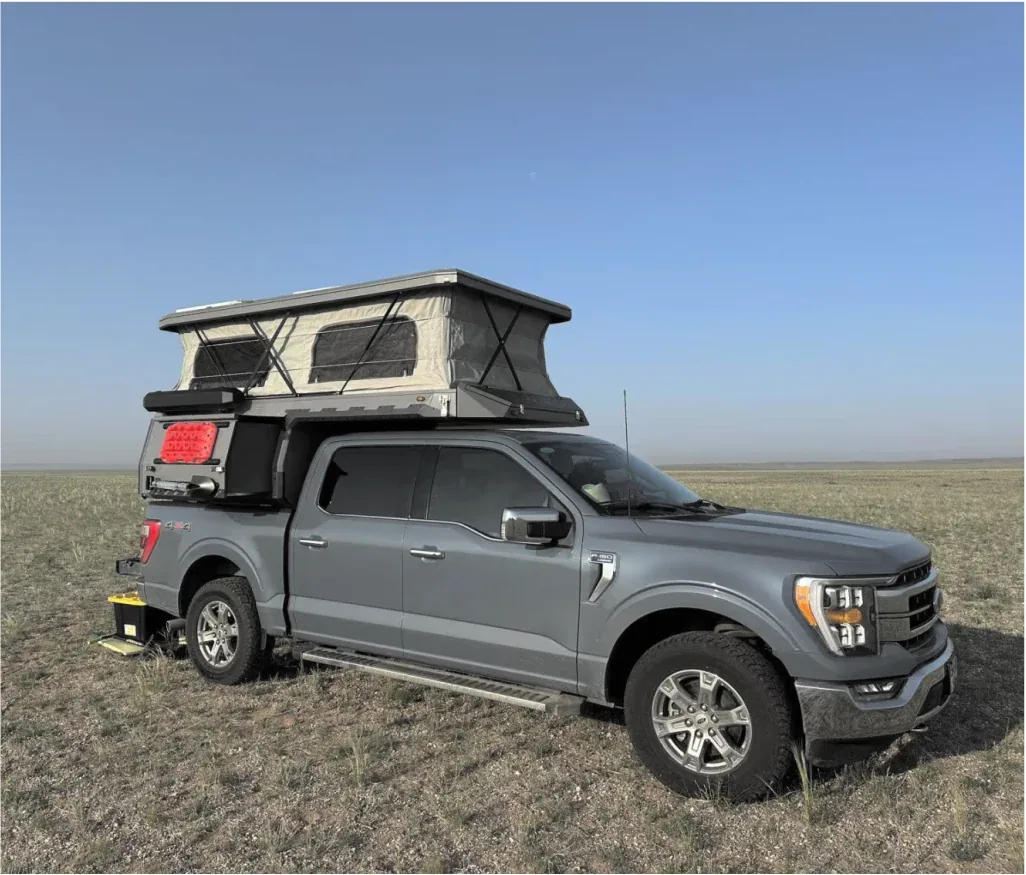
Where the weight question breaks down
Every dealer gets it, usually within the first minute of a camper conversation: how heavy is it? For a product that ships from a catalogue the question has a catalogue answer. For a made-to-fit pickup camper it does not, and pretending otherwise is where import programmes get into trouble. Every body is custom-made to the bed or chassis dimensions of the specific vehicle, and the weight that matters — the weight of the unit configured for that vehicle and that equipment list — is confirmed before the order is placed. That is not an evasion of the payload question. It is the reason the payload question can be answered honestly at all: the number is tied to a defined configuration instead of an average across a range.
Two halves of one equation
The payload conversation only looks unanswerable when both halves are directed at the same party. They are not. The truck side of the equation lives entirely in the customer's own vehicle documentation, and a dealer or rental operator can assemble it without asking the factory anything. The camper side — body length, mounting type, unit weight — is produced by the factory against that vehicle data, and it comes back as a written confirmation before the order rather than a figure on a brochure.
| Figure | Who holds it | When it is confirmed |
|---|---|---|
| Vehicle payload — the truck's own rating | The customer's vehicle documentation | Buyer side, before the customer shortlists a body |
| Roof load rating — for roof-top tents | The vehicle manufacturer and the rack supplier | At the point of sale, before the tent order is placed |
| Vehicle data — make, model, generation, bed or chassis dimensions | The customer and the dealer, from the vehicle itself | Buyer side, sent with the enquiry |
| Body length, mounting type and unit weight for that vehicle | The factory | Before the order — confirmed in writing against the specification |
What the buyer side can prepare today
None of the buyer-side data requires factory figures, which is why the payload objection should never stall a sale. For a camper body, the preparation is four data points: the make, model and generation of the pickup, and the bed dimensions — or the flatbed or chassis dimensions for the flat-deck and frame-mounted models. Alongside those, the vehicle payload from the handbook or door plate tells the dealer what the truck itself is rated to carry, which is the denominator of the whole equation. For a roof-top tent, the equivalent denominator is the roof load rating, and the tent line is explicit about it: installation requires a roof rack or crossbars as the base, and the roof load rating is confirmed before ordering.
These are, not coincidentally, the same data points the specification stage asks for. Send them with the enquiry and the factory returns a written specification naming the model and the options that apply — the confirmation of body length, mounting type and weight for that exact vehicle is part of what comes back before the order is committed.
How the factory half of the conversation closes
On the factory side the route is the published process: the buyer sends the pickup details, the target market and the equipment list, and a written specification comes back naming the model and the options. The fitment confirmation is explicit — the body length, the mounting type and the weight are confirmed before the order is placed, for the vehicle described in the data. Installation itself is non-destructive bolt-on mounting without cutting the vehicle, so a body can be moved to the next truck when the fleet turns over — which matters for rental operators, because the payload question is asked once per body configuration, not once per truck.
Configuration, not the model name, sets the number
This is the part of the payload conversation most often mishandled. The interior of every model is configured per order from the options catalogue — fridge, bathroom module, air conditioning, dinette systems, water and power — and the equipment level is confirmed against the written specification before production. Two units of the same model specified with different equipment are not the same unit by weight, so a single per-model figure would be wrong for at least one of them. The confirmation that matters is per configuration: the weight returned before the order is the weight of the unit as specified for that vehicle and that equipment list. The same logic applies across the structure decisions — the pop-top and hard-top roof sections are different constructions, and the frame-mounted residence model bolts directly to the chassis rather than sitting in the bed — so the mounting type in the written confirmation is part of the answer, not a footnote.
The roof-tent check is simpler and often missed
Roof-top tents are the easiest product in the range to sell and the easiest payload check to skip. The tents mount to any vehicle with a roof rack or crossbars, so the fitment question disappears — but the load question does not. The selection guidance for the tent line is to confirm the vehicle's roof load rating before ordering, and the models are rated to suit vehicles whose roof load rating matches. For a 4x4 retailer this is a thirty-second conversation at the counter; for a rental fleet it belongs in the hand-over checklist, because the tent will be moved between vehicles over its life and each new vehicle brings its own rating.
Answering the customer without inventing a number
Put together, the payload question has a clean counter script, and every line of it can be delivered without a single unpublished figure:
- Ask which truck: make, model, generation and bed dimensions — or flatbed and chassis dimensions for the flat-deck and residence models
- Have the customer confirm the vehicle payload from the handbook or door plate before fitment is discussed
- Send the vehicle data and the intended equipment level; the written specification returns the body length, mounting type and weight for that vehicle and configuration
- For roof-top tents, confirm the roof load rating and the rack before the order — the tent mounts to any vehicle, but the rating is per vehicle
- Quote only the confirmed figures; everything else is confirmed against the vehicle before the order, which is a stronger answer than an approximation
Price and lead time are quoted per order volume and destination, and compliance documents are confirmed against the destination market before the specification is committed — the payload confirmation sits inside the same written specification, at no extra stage. Send the vehicle details through the enquiry page and the confirmation of body length, mounting type and weight comes back before anything is ordered.