The short answer
Most importers assume a first order has to be a container, and that evaluating a supplier therefore means buying a range they have not sold yet. The production route does not work that way. Specification, quotation, production and inspection run the same way at any order size; what changes is how much product is inside them. A single unit can be built to the same written specification as the programme that follows it, which is what makes it an evaluation rather than a sample.
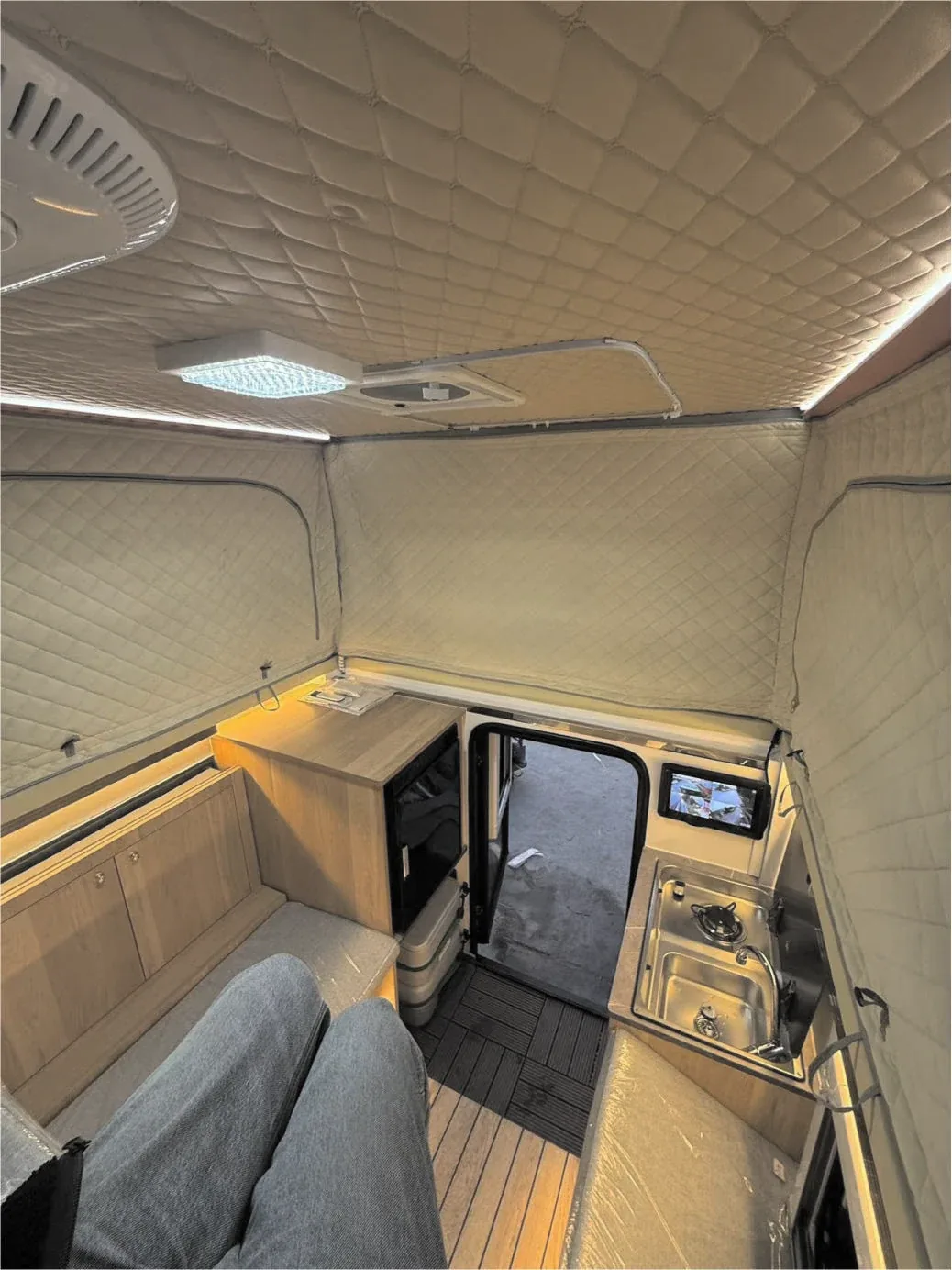
That distinction matters more than it sounds. A sample is usually built to show a shape. An evaluation unit is built to the specification you intend to sell — same body, same construction, same lift, same interior list — so what you unload is what your customers would receive. If the first unit is a one-off, you have tested the factory's ability to make a one-off and nothing else.
What the order size changes, and what it does not
Set the two orders side by side and the overlap is almost total. The lines that genuinely differ are quantity and price; everything that decides whether the product suits your market is settled before either of those is fixed.
| Decision | A single evaluation unit | A container programme | What it means for the buyer |
|---|---|---|---|
| Written specification | Still issued, against the vehicle data, model, equipment list and destination market | Same document, longer model list | You are testing the specification process rather than a template |
| Quotation | Issued against the confirmed specification, quantity and destination port | Same basis, larger quantity and mixed models | Price and lead time are order variables in both cases |
| Production | Built against the approved specification and artwork | Same build, scheduled at volume | Build quality observed on one unit speaks for the series |
| Progress records | Provided during production at the agreed checkpoints | Same checkpoints, more units in each | Monitoring is a process, not a volume privilege |
| Pre-shipment inspection | By your own inspector or a third-party company before loading | Same, on the full load | You can rehearse the inspection route on one unit |
| Shipping format | Assembled or in shipping configuration according to the model | Same choice per model | One unit shows how that model travels and handles |
| Parts and spares | A recommended spares kit ships with the first order | Same, scaled to the fleet | Parts supply is tested at unit one, not unit fifty |
Four stages that do not get shorter
The process is worth walking through once, because each stage produces a document you will use again when the programme scales.
- Specification: you send the pickup details — make, model, generation and bed or chassis dimensions — the target market and the equipment list; you receive a written specification naming the model and the options that apply.
- Quotation: issued against the confirmed specification, quantity and destination port, with lead time stated against that order volume rather than as a fixed number of days.
- Production: starts against the approved specification and artwork — body fabrication, interior fit-out and final assembly — with progress records at the agreed checkpoints.
- Inspection: carried out by your own inspector or a third-party company before the units are loaded.
What one unit proves, and what it does not
An evaluation is only honest if it recognises its own limits. One unit is a strong test of build quality, of whether your specification was read the way you wrote it, and of how much training a dealer or a rental counter will need at hand-over. It is a weak test of three other things.
- Container economics: how a mix of bodies and flat-pack roof tents loads, and what the delivered cost looks like across a full load, is a question for the programme order rather than for one body.
- Retail demand: a unit in your showroom tells you what customers ask about, which is useful, but it is not a sales forecast.
- Fleet consistency: whether twenty units arrive identical can only be tested at twenty units — although the discipline that keeps them identical is the specification and parts routine that starts at unit one.
That last point is why the one-off build is the trap. A showroom special with a different lift, a different window count or a layout that will never be repeated tests the factory and tells you nothing about the order that follows it. Specify the evaluation unit as though the container were already ordered.
Specifying the evaluation unit
Send the same package you would send for a container, at the same level of detail. Anything left vague is filled in by assumption, and an assumption that reaches production is what makes a first order expensive to correct.
- The exact vehicles the unit will be fitted to, with bed dimensions — or flatbed and chassis dimensions if the body is a deck or frame-mounted model.
- The catalogue model, and the construction route it carries.
- The lift mechanism written against that model and its roof section.
- The interior equipment list from the options catalogue, together with the layout and berth arrangement it has to fit.
- Body colour, graphic livery and window count if the unit will carry your brand, since the exterior identity is set per order and artwork is approved in writing before production.
- The destination market, so the compliance documents position is confirmed for that exact configuration before the order.
- The order volume and destination port you are working towards, so the quotation is issued against real numbers rather than a placeholder.
A first-order checklist
- Written specification signed off before any deposit: model, vehicle data, equipment list, lift, exterior identity.
- Quotation read against the specification, the quantity and the destination port, with lead time expressed against that volume.
- Compliance documents position confirmed for the destination market and this configuration before the order.
- Progress record checkpoints agreed at the start of production rather than requested at the end.
- Pre-shipment inspection booked before loading, with third-party access arranged in advance if you intend to use an inspection company.
- Recommended spares kit included with the first order, with the parts you expect to move in the first service interval.
- Evaluation criteria written down before the unit lands: what you will check, what you will photograph and who signs it off.
- Shipping format confirmed for the model, and the destination port named on the order.
If you are running the evaluation to decide on a branded programme, the specification and artwork are kept on file, so a follow-up order is produced to the same standard without a second round of approval.
A camper programme can be started with one unit or with a container, and the difference between the two is quantity, not route. Build the evaluation unit to the specification you intend to sell, keep the records the process produces, and the decision to scale becomes a reading of evidence instead of a gamble. Send us the vehicle and the use case you are testing for, and we will return the specification and the quotation that goes with it.