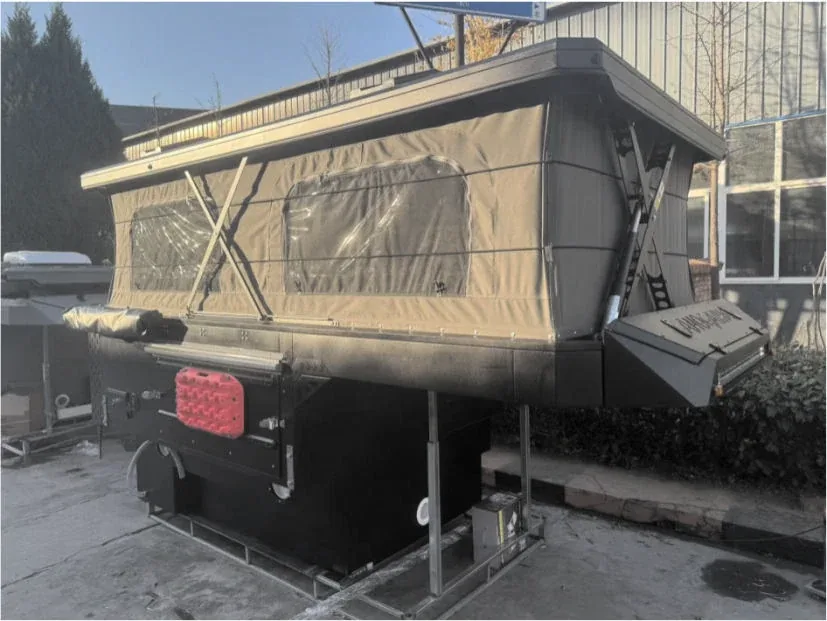
Where the camp kit lives in the catalogue
On the model pages, the campable part of the order is split across two places. The standard inclusions list already carries the structure: pop-top canvas or hard shell, the windows, the storage boxes and the mounting hardware. Everything that makes the unit comfortable to live in outside the cabin sits in the options catalogue, grouped as body and roof hardware. That split matters commercially: two quotations for the same model can differ by several thousand dollars of camp kit before the interior is even discussed, which is exactly why the equipment level should be written into the specification rather than left as a verbal agreement.
The short list that makes a body campable
The outside-the-cabin options come from a short list. Not every item is offered on every model — the model page lists what applies to that configuration — but the catalogue as a whole covers:
- 270-degree awning — a wrap-around side and rear awning, the single biggest change to how a unit is used at camp
- Shower tent — a freestanding privacy enclosure that pairs with the outdoor shower option
- Air conditioning — a top-mounted roof unit or a split system with an external condenser
- Roof rack or drag-reduction roof box — offered with or without an LED searchlight
- Canvas windows — additional window sections in the pop-top canvas itself
- Outward-pushing windows and a camper door with push-out window section for through-flow ventilation
- Anderson plug — the exterior charging connector between vehicle and camper
Two of these deserve a second look. The awning is the item that turns a parking spot into a living space, and it is also the most visible piece of equipment in retail photography — a dealer showing a unit with a wrap-around awning deployed is showing a use case, not just a box. The outdoor shower is the opposite: invisible in a photograph, decisive in a rental context, where a shower at the vehicle is the difference between guests booking another night and driving to the nearest paid facility.
How the mix changes with the buyer
The same catalogue serves three different buyers, and the recommended mix moves with each of them.
| Buyer | Kit emphasis | Why |
|---|---|---|
| Retail customer (overland and touring) | 270-degree awning, outdoor shower with shower tent, roof rack, canvas windows | The kit is the selling story: comfort at camp is what moves the unit off the floor |
| Rental or tour fleet | Awning, outdoor shower, air conditioning in warm markets, roof box for guest luggage | Hand-over speed and durability; every option is something staff must explain and maintain |
| Trade and work-truck use | Roof rack or drag-reduction box, tie-down anchor points, minimal camp hardware | The body earns its keep as cargo or work space; camp equipment is dead weight on a Monday morning |
The canopy range shows this logic most clearly. The C1 and C2 are all-aluminium high covers with a folding roof tent built into the roof — the canopy itself is the daily-use product, and the recommended camping additions are deliberately narrow: interior lighting as the interior option, outdoor shower and side awning as the exterior ones. A trade buyer takes the canopy with none of the three; a dual-use buyer takes all of them and has one vehicle doing two jobs.
Where the roof decisions concentrate
Roof equipment is where the camp kit interacts with structure, so it deserves its own pass through the specification. A fixed hard-top roof is a natural mounting surface — roof racks, air conditioning and solar are planned when the specification is confirmed rather than improvised after delivery. On pop-top models the lifting roof section constrains what can sit on top: the drag-reduction roof box and roof rack options exist on models where the roof type supports them, and canvas windows or the canvas roof itself are wear-surface decisions a cold or wet market weighs differently from a dry one.
Deciding the kit before the layout
Because the interior is configured per order, the exterior kit should be settled first. The awning position, the outdoor shower plumbing and the air-conditioning unit all demand their place in the body or roof before the furniture layout is drawn around them; reversing the order is how options end up negotiated twice. The practical sequence for a dealer or fleet specifier:
- Fix the model and the construction — that decides which exterior options are on the table at all
- Choose the roof equipment against the roof type, not against the catalogue photo
- Add the awning and shower decisions from the buyer-type table above
- Then configure the interior, with the services those exterior choices need already reserved
- Confirm the full list — exterior kit, interior equipment, colour and livery — in the written specification before the quotation
Prices are quoted per order volume and destination, and compliance documents are confirmed against the destination market for each configuration before the specification is committed. Send the vehicle details and the intended use case through the enquiry page, and the equipment level comes back as part of the written specification rather than as a price list.