A sleep unit is judged on the second hire, not the first
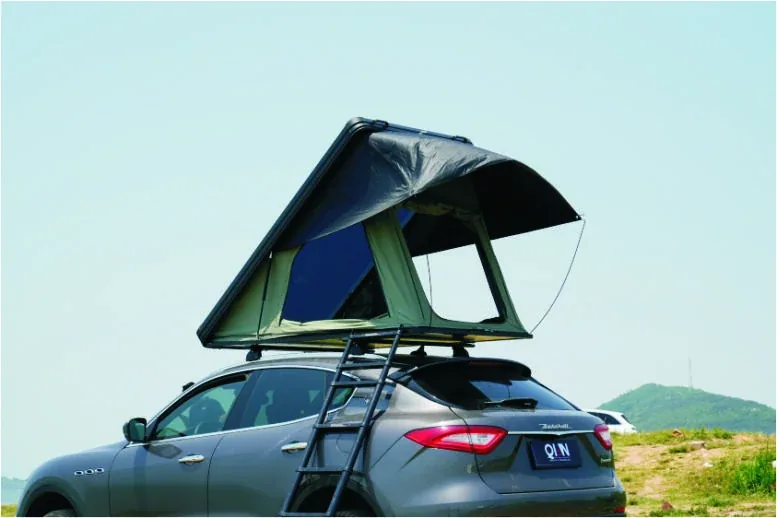
Whatever a guest slept in has to come back, be checked, and go out again in the same condition. Every soft surface in a sleep unit is a cost against that cycle, and every step of setup is a step a staff member has to teach. The roof-top tent line answers both problems differently from a camper body. Both R1 and R2 are hard shells, so the only fabric in use is the section that opens — there is no canvas body to dry out between hires. The unit ships as a complete sleep kit, with the mattress, a telescopic ladder and the mounting kit included, and it containerises as a compact flat pack.
That combination is why a fleet already running camper bodies can add tents without adding a maintenance category. A roof-top tent is not a smaller camper; it is a different kind of asset — flat to store, short to hand over, and mountable to any vehicle with a roof rack instead of to one specific pickup bed.
The same hire cycle, read against both products
Compare the two against the work a hire fleet actually does and the difference stops being a product question. It is a question about what the operator has to manage between hires.
| Stage of the hire cycle | Camper body (T, H and C ranges) | Roof-top tent (R1 and R2) |
|---|---|---|
| Hand-over briefing | Pop-top bodies need the roof raised and secured at camp with the canvas section deployed; hard-top and canopy units open and are ready | The shell opens as one movement and the mattress is already in place; the ladder is part of the included kit |
| Between hires | Interior surfaces, equipment and, on pop-top models, the canvas section are checked | The shell closes; the opened section is the only fabric to check |
| Storage | Kept on the vehicle, or removed as a unit and stored | Stores as a compact flat pack, on or off the vehicle |
| Vehicle scope | Made to a specific pickup bed, flatbed or chassis | Mounts to any vehicle with a roof rack or crossbars |
| Guest vehicles | The body belongs to a truck in the fleet | Can serve a guest whose own vehicle carries a rated rack |
| Fleet uniformity | Built from the decisions settled before the order, one body at a time | One shell design, one included list, one briefing |
| Service and spares | Lift mechanisms, windows and hardware supplied from the same production line | Mounting hardware is part of the included list on every unit |
Canvas is a feature in retail and a process in a fleet
In a retail sale, canvas is what gives a pop-top body its standing headroom, and buyers accept it as part of the product. In a rental fleet the same canvas is a procedure: checked at hand-over, dried before the unit is stored, and eventually replaced on a schedule the fleet pays for rather than the guest. A hard shell does not remove fabric altogether, but it moves the fabric to the one place where it is open and visible — the section that unfolds — instead of making the whole upper body a soft surface.
For a fleet already committed to pop-top bodies, that is an argument for adding tents as the second sleep unit rather than buying a second fleet of bodies. The body remains the product for hires that need an interior, a kitchen and a made-up bed. The tent covers the hires where the vehicle matters more than the accommodation.
Where a camper body still wins
The tent is not a substitute for a body in every hire. A guest who expects to stand up, cook inside or travel for a week with a family needs the interior, and the tent does not pretend to offer one. The canopy range sits between the two positions: an all-aluminium high cover with wing windows on three sides and a folding roof tent built into the roof, so the bed keeps working as lockable cargo space and the sleeping area sits on top. For a fleet that hires to trade customers and weekend guests from the same yard, that is the unit that covers both jobs without a second vehicle class.
The fleet decision is therefore a mix decision rather than a product decision. Bodies for the long hires and the family business, tents for the short hires and the one-way work, canopies where the truck has to earn its keep on Monday — three price points of the same range, on one order and one parts relationship.
The rack and the rating belong on the vehicle list
Installation requires a roof rack or crossbars as the base, and the vehicle has to have a roof load rating to suit. Both facts belong to the vehicle, not to the tent, so in a fleet they belong on the vehicle list: recorded once per vehicle, checked before a unit is allocated, and re-checked when the vehicle is replaced.
That is the same discipline a fleet already applies to camper bodies, where every body is made to a specific bed or chassis and the body length, mounting type and weight are confirmed before the order. The difference is scale of effort: the tent confirmation is a one-line entry per vehicle rather than a specification. Rack present, rating to suit, unit allocated — and the tent can move to the next vehicle on the list when the old one leaves the fleet.
One container, one fleet standard
Roof tents ship as compact flat packs and are the easiest item in the range to containerise. MOQ is flexible and depends on the series and the shipping format, and mixed-model container loads are accepted, so a first fleet order can combine camper bodies with tents for the same fleet instead of committing to a separate shipment.
Because both shell designs are hard shells and both ship with the same included list, the fleet standard is short: pick one shell design, set the shell colour to your brand, and keep the option list to the accessories you are prepared to stock — an annex and a shoe bag are the documented additions. A single design is easier to run than a choice at the counter: two designs mean two briefings, two sets of parts and two answers to every question a guest asks.
Fleet selection checklist
- Write the vehicle list first, with the rack and the roof load rating recorded against every vehicle that could carry a tent.
- Choose one shell design for the fleet — R1 or R2 — by opening format and packed profile, and keep the fleet on it.
- Treat the included list as the standard: mattress, telescopic ladder and mounting kit ship with every unit, so nothing has to be added to make a tent hireable.
- Fix the accessory list you will stock, separately from the included list, and price the upgrade tier against it rather than fitting accessories per hire.
- Plan the model mix with the bodies: tents flat-pack into the same mixed container, so the tent line can start on the order that is already going.
- Write the hand-over script once — shell open, ladder position, where the mattress sits — and use the same script for every vehicle type in the fleet.
- Set the shell colour to your brand if the fleet is guest-facing, and confirm the artwork in writing before production.
- Confirm the compliance documents for the destination market before the specification is frozen.