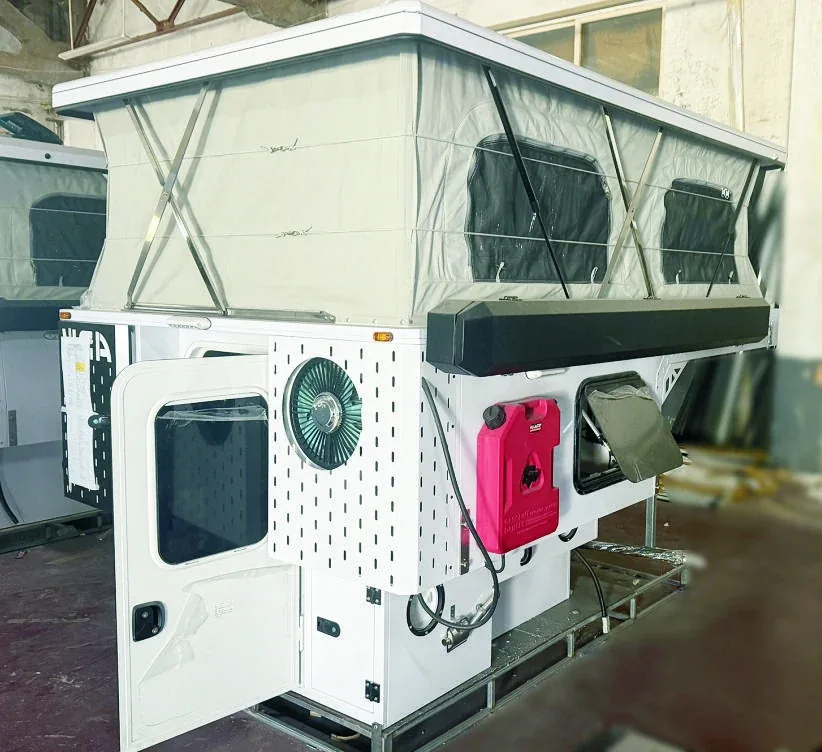
Six stages, six records
A camper order crosses a production floor for weeks between the first enquiry and the closed container, and every week of that build produces something the buyer should be holding a copy of. The process on the factory side is published in six stages — specification, quotation, production, inspection, shipping and after sales — and the useful way to read it is not as a description of how the factory works, but as a list of the documents that should exist on the buyer side at the same time. Each stage leaves an artefact: a specification, a quotation, progress records, inspection evidence, a shipping configuration, a spares kit list. When all six are on file, the order can be reconstructed from paper alone — and that is exactly the position an importer wants to be in if a shipment arrives with a question attached.
| Stage | Record you should hold | What it proves |
|---|---|---|
| 1. Specification | A written specification naming the model, options, colour, livery and equipment level | Both sides are building the same unit; the verbal agreement ends here |
| 2. Quotation | A quotation issued against that specification, a quantity and a destination port | The price is attached to a definition, not to a brochure |
| 3. Production | Progress records at the agreed checkpoints | The build is tracking the specification while there is still time to correct it |
| 4. Inspection | Photo or video records from the inspection points, plus inspection access before loading | Someone acting for the buyer saw the finished units |
| 5. Shipping | The confirmed shipping configuration for each model in the order | You know what arrives at the port and how it unloads |
| 6. After sales | The spares kit list that ships with the first order | Service begins on delivery day, not when the first part fails |
The specification and the quotation are one pair
The first two records only work together. The quotation is issued against the confirmed specification, the quantity and the destination port, and the lead time is stated against that order volume rather than as a fixed number of days. A quotation that arrives without a specification behind it is a price with assumptions attached — and assumptions are what turn a reorder into a renegotiation. The specification itself should carry the fitment data, because that is where campers differ from most imported goods: the body is made to the vehicle, so the make, model, generation and bed or chassis dimensions go in, and the body length, mounting type and weight come back confirmed before the order is placed. For a branded programme, the same file holds the artwork, which is approved in writing before production starts — the livery that goes on the units is a record, not an email thread.
What production records are actually for
During production the buyer receives progress records at the agreed checkpoints, and the practical value of those records is timing: a checkpoint exists so that a mistake is found while it is still cheap. The interior layout, the equipment level, the colour scheme and the livery are all configured per order, which means every one of them is a decision that can be corrected early and expensive to correct late. A photo of the fit-out half-finished is not a courtesy update — it is the last point at which a dinette that reads wrong in the specification can still be changed before the panels are riveted around it. Buyers who skip the checkpoints are not saving effort; they are deferring every discovery to the inspection, where the only remedy left is a rework conversation.
Inspection: whose eyes are on the unit before the container closes
Pre-shipment inspection is carried out by the buyer's own inspector or a third-party inspection company before the units are loaded, and the factory arranges access for it. Alongside the visit itself, the buyer holds photo or video records from the agreed inspection points. For a first-time importer, the third-party route is the standard mechanism: an independent inspector walks the line, checks the units against the written specification and files a report the buyer can act on before the container is sealed. The distinction worth holding onto is that the inspection report covers the units against the specification — which is why the specification is record number one. Without it, the inspector has nothing to inspect against beyond a general impression of build quality.
The records that follow the container
Two artefacts matter after the units leave the floor. The first is the shipping configuration: units ship assembled or in shipping configuration according to the model and how the buyer wants to receive them at the destination, and roof-top tents containerise as flat packs. That decision belongs in writing per model line, because it determines what the receiving team meets at the port — a unit that rolls off, or a crate that needs assembly — and it affects the unload plan, the registration steps and the first retail preparation. The second is the spares kit list: a recommended spares kit ships with the first order, and additional parts — lift mechanisms, windows, hardware — continue to come from the same production line as the complete units. The list is what turns after-sales from a promise into an inventory plan on the buyer side.
A filing test any supplier can be given
The six records also work as a due-diligence test, and it can be run before any money moves. Ask a prospective supplier to produce each record on request — an actual specification document, an actual quotation format, a description of the checkpoint schedule, the inspection access they arrange, the shipping configurations they offer and the spares kit list from a previous first order. A manufacturer that runs its own line produces these as a matter of course, because the same records are how the factory itself tracks the build. A supplier that goes quiet when asked for one of them is telling you which stage of the order will run on trust.
For a repeat programme, one more record joins the file: the supplier keeps the specification and artwork on file, so a follow-up order is produced to the same standard without re-approval. That only works if the first-order documents were complete — the repeat order is only as good as the file it is produced from.
The filing checklist
- Get the written specification before discussing price — model, options, colour, livery, equipment level and the fitment data
- Check the quotation names the specification, the quantity and the destination port
- Agree the production checkpoints and put the checkpoint schedule in the order documents
- Book the inspection route early: your own inspector or a third-party company, with access confirmed before loading
- Confirm the shipping configuration per model line before the container plan is drawn
- Ask for the spares kit list with the first order and file it with the fleet records
- File the specification and artwork for the programme, so the repeat order reproduces them without re-approval
Price and lead time are quoted per order volume and destination, and compliance documents are confirmed against the destination market before the specification is committed — which is one more reason the paper trail comes first. Send the vehicle details and the intended use case through the enquiry page, and the first record of the six, the written specification, is what comes back.