The market decision comes before the configuration decision
Most first-time buyers work the sequence backwards: they choose a model, settle the equipment, and only then start asking what paperwork the destination market requires. The documented route on this site runs in the opposite direction. Stage 01 of the ordering process explicitly takes the destination market as an input — alongside the pickup details and the equipment list — and the certifications answer states the rule plainly: compliance requirements differ by product and by destination market, so the supplier confirms which documents can be supplied for that configuration before the buyer commits to a specification. Naming the market is not a formality at the end of the negotiation; it is one of the three inputs the whole specification is built from.
Why the same body can mean different paperwork
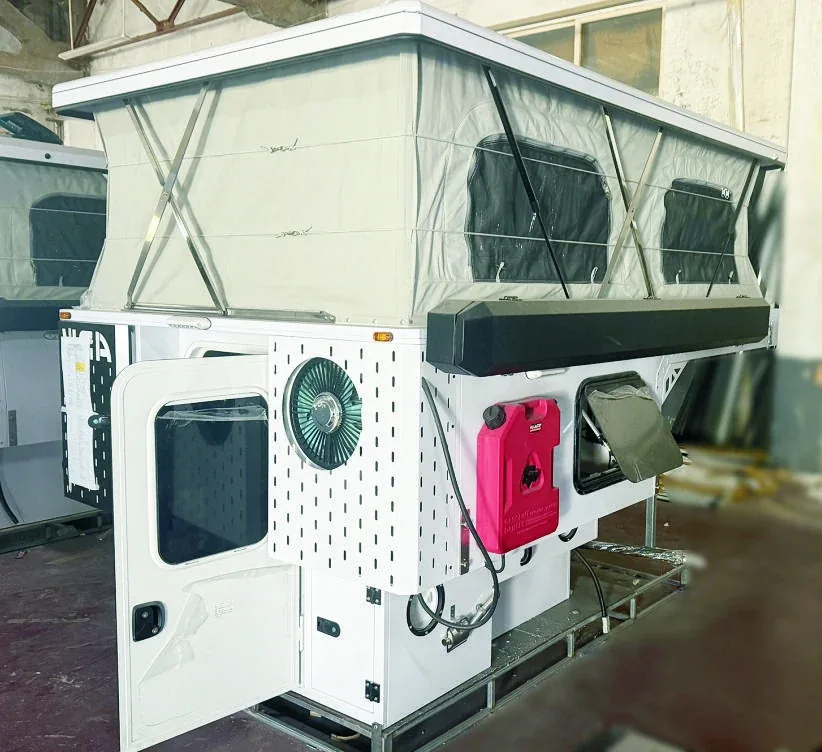
A configuration is more than a model name. Two orders can both say pop-top and still be different products for paperwork purposes, because the product the documents run on is the combination of model, construction route and equipment level. Interior equipment is configured per order from the options catalogue — cooking units, bathroom modules, air conditioning, monitoring — and the exterior identity is set by the buyer, so the finished configuration is genuinely specific to each order. Since compliance requirements differ by product, the configuration defines the conversation; the model name on its own does not.
The destination market does the same work from the other side. Two identical configurations sold into two different markets are not the same product once the documents are involved, which is why the market travels with the specification rather than behind it.
What shapes the compliance-document conversation
| Input | Who sets it | Where it enters the route |
|---|---|---|
| Destination market | The buyer — named with the enquiry, not after the quotation | Stage 01, alongside the vehicle details and equipment list |
| Model and construction | Buyer choice from the range; fitment to the pickup is confirmed before anything else | The stage-01 written specification |
| Equipment level | Buyer, configured per order from the options catalogue | Stage 01 — it completes the product definition |
| Document confirmation | The supplier, per configuration and market | Before the order is committed — inside the negotiation, not after it |
| Build verification | Buyer inspector or third-party company | Pre-shipment inspection before loading; progress records during production |
Where the conversation sits in the order route
The route gives the compliance conversation a fixed address. At stage 01 the buyer sends the pickup details, the target market and the equipment list, and the factory returns a written specification naming the model and the options that apply. At stage 02 the quotation is issued against that confirmed specification, the quantity and the destination port. The document confirmation belongs between those two events: the requirements are checked against the named market and the exact configuration, and the answer lands before the order is committed. Leave the question open past that point and it stops being a compliance question and becomes a change to a frozen specification — which reopens the quotation, the artwork and the production schedule with it.
The same logic runs through production and shipping. Buyers receive progress records during production and access for third-party inspection before loading, so the build can be verified against the specification the documents were confirmed on. And because the inspection and documentation capability confirms compliance documents per configuration and market, the paperwork and the build share one reference: the confirmed specification. For private-label brands there is an extra layer — packaging, manual and warranty wording are produced in the buyer brand, and that wording has to read against the market the units are sold into, which is one more reason the market is named early.
The questions that close the conversation
- Which market is this configuration for? Name it in the enquiry — it is a stage-01 input, not a shipping detail.
- What is the product definition the documents run on — model, construction and equipment level together, not the model name alone?
- Which documents can be supplied for that configuration in that market? Expect the answer in writing, before the order is committed.
- What happens if the equipment level changes? The configuration changes, so the document conversation reopens — settle the equipment list early.
- When is the confirmation made? Before the order, so it sits inside the quotation rather than after it.
- Who verifies the build before loading? Third-party inspection access is documented — use it, and keep the document set with the shipment records.
The pre-order compliance checklist
- Write the destination market into the stage-01 enquiry — vehicle details, equipment list and market sent together.
- Treat model, construction and equipment level as one product definition for paperwork purposes.
- Ask which documents can be supplied for that configuration in that market — and expect the answer before, not after, the order.
- Hold the specification freeze while a document question is still open; a late market or equipment change reopens compliance with everything downstream of it.
- Keep the confirmation inside the quotation stage: documents confirmed per configuration before the order is committed.
- Use the production checkpoints and the pre-shipment inspection to verify the build against the same specification the documents were confirmed on.
- For repeat programmes, keep the confirmed document set on file with the specification and artwork, so the follow-up order inherits both.